Enterprise AI Transformation: Unlocking Strategic Advantage
Financial enterprises are embracing AI as a catalyst for innovation, revolutionizing operations, and securing a competitive edge. This strategic overview highlights the AAA framework for AI implementation, encompassing key solutions and benefits across risk management, investment strategies, customer engagement, and compliance.
Core Benefits:
– Enhanced Data Analysis: AI algorithms drive deep market and customer insights, enabling data-driven decisions.
– Risk & Compliance Mastery: Proactive AI detects anomalies, ensures regulatory adherence, and liberates resources for strategic growth.
– Personalized Customer Experiences: AI tailors services, fostering stronger client relationships.
– Operational Efficiency: Automation reduces costs, improves accuracy, and boosts overall performance.
Strategic Pillars:
– Accessibility & Training: Make AI solutions enterprise-wide, empowering all stakeholders.
– Adoption & Culture: Foster an AI-embracing culture for competitive advantage.
– Assurance & Governance: Establish robust AI ethics, transparency, and accountability.
Key Solutions:
– Risk Management: Data-driven assessment, automated compliance, fraud detection, and personalized risk profiles.
– Investment Strategies: Personalized portfolios, enhanced risk mitigation, and operational efficiency.
– Customer Experience: Chatbots for 24/7 support, personalized insights, and cost savings.
– Predictive Analytics: Automated forecasting, scenario modeling, and real-time performance monitoring.
Thought Leadership & Growth:
– Cultivate data-driven leadership through continuous learning and collaboration.
– Build partnerships with AI experts and stay informed about industry regulations.
– Leverage AI to navigate market dynamics, ensure long-term success, and solidify industry leadership.
In the rapidly evolving financial landscape, Artificial Intelligence (AI) is disrupting traditional models, transforming how institutions operate and serve their clients. As businesses seek competitive advantage, understanding and leveraging AI’s potential becomes imperative. This article delves into the strategic deployment of AI in finance, highlighting its enterprise benefits such as enhanced risk management, personalized customer experiences, and operational efficiency improvements. We will explore thought leadership frameworks that can guide organizations in navigating this disruptive era, ultimately positioning them for long-term success in a data-driven future.
- Leveraging AI for Data-Driven Financial Decisions
- Transforming Risk Management with Advanced AI Technologies
- Automating Investment Strategies: AI-Powered Portfolios
- Enhancing Customer Experience Through AI Chatbots in Banking
- AI in Compliance: Streamlining Regulations for Financial Institutions
- Predictive Analytics for Strategic Financial Planning and Forecasting
Leveraging AI for Data-Driven Financial Decisions

Leveraging AI for Data-Driven Financial Decisions
In today’s rapidly evolving business landscape, Artificial Intelligence (AI) is no longer a futuristic concept but a powerful reality reshaping industries, including finance. This transformative technology offers enterprises unprecedented opportunities to enhance decision-making, optimize operations, and gain a competitive edge. Specifically, AI in finance disrupts traditional models by enabling data-driven decisions, fostering holistic AI partnering, and driving continuous improvement through reentry and identity education.
Enterprise Solutions and Business Benefits
1. Enhanced Data Analysis and Insights: AI algorithms can process vast amounts of financial data, identifying patterns, predicting trends, and generating actionable insights. This capability empowers financial leaders with a deeper understanding of market dynamics, customer behavior, and investment opportunities, leading to more informed and strategic decisions.
2. Risk Management and Fraud Detection: AI-powered solutions enhance risk assessment by analyzing historical data and real-time transactions to detect anomalies and potential fraudulent activities. This proactive approach strengthens enterprise security, mitigates risks, and protects against financial losses.
3. Personalized Customer Experiences: By leveraging AI, financial institutions can offer highly personalized services, tailored to individual client needs and preferences. This level of customization fosters stronger customer relationships, improves satisfaction, and drives loyalty.
4. Operational Efficiency and Cost Reduction: AI automation streamlines repetitive tasks, liberates employees from mundane work, and reduces operational costs. This frees up resources for more strategic initiatives, allowing enterprises to allocate their human capital where it matters most.
5. Holistic AI Partnering: Successful AI implementation requires collaboration between finance, technology, and business units. A unified approach ensures that AI solutions are aligned with overall enterprise strategies, promoting a culture of data-driven decision-making and fostering innovation.
Strategic Insights: AAA Framework for Leaders
Adopting AI in finance necessitates a structured approach to maximize its potential. The AAA framework—Accessibility, Adoption, and Assurance—provides a powerful thought leadership framework for leaders navigating this transformative journey:
Accessibility: Ensure AI solutions are accessible to all relevant stakeholders, from front-line employees to C-suite executives. Provide training and education to bridge the digital divide, empowering every team member to contribute to AI-driven decision-making.
Adoption: Foster a culture that embraces AI as a strategic tool for competitive advantage. Encourage pilot projects and proof-of-concepts to demonstrate the tangible benefits of AI, building momentum and gaining buy-in across the organization.
Assurance: Establish robust governance frameworks and ethical guidelines to ensure responsible AI usage. Implement transparency measures, audit trails, and accountability mechanisms to build trust and address concerns related to data privacy, bias, and fairness.
Conclusion
AI is not just a passing trend; it is a fundamental shift in how enterprises operate and compete. By leveraging AI for data-driven financial decisions, businesses can unlock unprecedented insights, optimize operations, and deliver exceptional customer experiences. Embracing the AAA framework guides leaders in navigating this transformative journey, ensuring a holistic AI partnering approach that drives continuous improvement and fosters a culture of innovation. The future of finance is here, and AI is its engine.
Transforming Risk Management with Advanced AI Technologies

Transforming Risk Management with Advanced AI Technologies
In the rapidly evolving financial services landscape, artificial intelligence (AI) is not merely a trend—it’s a disruptive force reshaping traditional models and revolutionizing risk management. Enterprises across the globe are leveraging AI’s potential to gain unprecedented insights, automate processes, and make data-driven decisions with unparalleled speed and accuracy. This transformation extends far beyond cost savings; it empowers financial institutions to mitigate risks more effectively, enhance customer experiences, and maintain a competitive edge in a dynamic market.
Enterprise Solutions for AI-Driven Risk Management
To harness the full power of AI, financial institutions must adopt a strategic approach that aligns technology with business objectives. Here are key enterprise solutions and benefits:
– Data-Driven Risk Assessment: AI algorithms can analyze vast amounts of historical and real-time data to identify patterns and predict potential risks. This capability enables enterprises to assess credit risk, market volatility, and operational vulnerabilities with greater precision, leading to more informed decision-making and proactive risk mitigation strategies.
– Automated Compliance and Regulatory Reporting: AI streamlines compliance processes by automatically extracting relevant data from various sources, ensuring accurate and timely reporting. This not only reduces the risk of errors and penalties but also frees up resources, allowing enterprises to focus on strategic initiatives and staying ahead of evolving regulatory requirements.
– Fraud Detection and Prevention: Advanced AI models, including machine learning and deep learning, can detect anomalies and potential fraudulent activities in real time. By continuously learning from new data, these systems adapt to evolving fraud schemes, significantly enhancing the accuracy and speed of detection, and minimizing financial losses.
– Personalized Risk Profiles: AI can create personalized risk profiles for clients, considering a comprehensive range of factors beyond traditional credit scores. This enables enterprises to offer tailored financial products and services, catering to individual risk appetites and needs, and fostering stronger client relationships.
Business Benefits of AI in Risk Management
The implementation of AI technologies in risk management brings about several tangible business benefits:
– Enhanced Operational Efficiency: Automation reduces manual effort and errors, allowing enterprises to process data and generate insights faster. This improved efficiency enables staff to focus on higher-value tasks, enhancing overall productivity and enabling businesses to adapt quickly to changing market conditions.
– Reduced Operational Risk: AI’s ability to identify and mitigate risks in real time minimizes the potential for costly errors and operational failures. By anticipating and preventing risks, enterprises can protect their reputation, maintain customer trust, and ensure business continuity.
– Improved Risk-Adjusted Returns: Data-driven insights enable more accurate pricing of financial products and services, leading to improved risk-adjusted returns. AI can identify opportunities for diversification, optimize investment strategies, and enhance overall financial performance.
– Competitive Advantage: Early adoption of AI in risk management positions enterprises as industry leaders. This technology allows businesses to stay ahead of the curve, respond swiftly to market changes, and offer innovative products and services, gaining a competitive edge in a crowded and evolving financial landscape.
Strategic Insights from Global Thought Leaders
To stay at the forefront of this transformation, financial institutions should engage with global thought leaders and participate in forums dedicated to AI innovation. These platforms provide opportunities to:
– Learn from Peers: Share best practices, gain insights into successful implementations, and identify potential challenges and solutions through peer-to-peer collaboration.
– Stay Informed: Keep abreast of the latest advancements in AI technologies and their practical applications in risk management, ensuring enterprises remain on the cutting edge.
– Foster Future-Oriented Leadership: Develop a culture of continuous learning and innovation by encouraging leaders to embrace AI as a strategic tool, driving enterprise growth and competitiveness.
– Network with Global Experts: Establish valuable connections with industry experts, researchers, and innovators, fostering knowledge exchange and collaboration on a global scale.
By embracing AI in risk management, financial institutions can navigate the complexities of a rapidly changing business environment, ensure long-term sustainability, and position themselves for continued success in a future-oriented market.
Automating Investment Strategies: AI-Powered Portfolios

Automating Investment Strategies: AI-Powered Portfolios
Artificial Intelligence (AI) is transforming traditional financial models, offering unprecedented opportunities to optimize investment strategies. The ability of AI algorithms to process vast amounts of data, identify complex patterns, and execute decisions at speed unmatched by humans is revolutionizing portfolio management.
Enterprise Solutions:
Personalized Investment Advices: AI-driven platforms can analyze an individual investor’s risk profile, financial goals, and market preferences to construct highly customized portfolios. This ensures that investment strategies are tailored to specific needs, leading to improved performance and greater satisfaction.
Enhanced Risk Management: Machine learning models can predict market volatility, identify potential risks, and adjust portfolio compositions proactively. By leveraging historical data and real-time market intelligence, AI algorithms can help mitigate downside risk and optimize returns.
Efficiency and Scalability: Automating investment processes liberates financial professionals from repetitive tasks, allowing them to focus on strategic decision-making and client relationship management. This leads to increased operational efficiency and the ability to manage larger portfolios.
Business Benefits:
Improved Return on Investment (ROI): AI algorithms can identify profitable opportunities and optimize asset allocation, potentially leading to superior financial performance.
Cost Reduction: Automating routine tasks reduces operational expenses associated with manual investment management.
Enhanced Customer Experience: Personalized investment advice and real-time portfolio insights empower clients to make informed decisions, fostering trust and loyalty.
Strategic Insights and Considerations:
Implementing AI in investment strategies requires a thoughtful approach that addresses ethical concerns, ensures data governance, and promotes transparent communication.
AI Governance Frameworks: Establishing clear guidelines for AI development, deployment, and monitoring is crucial. These frameworks should encompass data privacy, algorithmic bias mitigation, and accountability for AI-driven decisions.
AI Ethics and Policy: Organizations must prioritize ethical considerations, such as fairness, transparency, and responsible use of data, throughout the AI lifecycle.
Systemic Thinking for Leaders: Financial leaders should adopt a systemic perspective, understanding how AI integrates within broader organizational strategies and market dynamics. This involves fostering a culture of continuous learning, encouraging collaboration across departments, and staying abreast of regulatory developments related to AI in finance.
Enhancing Customer Experience Through AI Chatbots in Banking

Enhancing Customer Experience Through AI Chatbots in Banking
Artificial Intelligence (AI) is disrupting traditional financial models, revolutionizing how banks interact with their customers. At the forefront of this transformation are AI chatbots, which offer a sophisticated and personalized customer experience. These intelligent virtual assistants are transforming the banking industry by providing 24/7 accessibility, streamlining complex tasks, and offering tailored financial guidance.
Enterprise Solutions:
Round-the-Clock Availability: AI chatbots provide instant customer support, allowing users to access account information, initiate transactions, and receive personalized recommendations at any time. This enhances customer satisfaction by eliminating wait times and empowering individuals to manage their finances on their terms.
Simplified Task Execution: From opening new accounts to transferring funds, AI chatbots can handle a wide range of tasks, reducing the workload on human agents. This allows bank personnel to focus on more complex issues, thereby improving operational efficiency and reducing costs.
Personalized Financial Insights: Leveraging machine learning algorithms, AI chatbots analyze customer data to offer tailored financial advice. They can suggest investment opportunities, provide budget planning tools, and even predict future financial needs, fostering a proactive and engaging customer relationship.
Business Benefits:
Increased Customer Loyalty: The convenience, accessibility, and personalized nature of AI chatbot interactions contribute to higher customer satisfaction and loyalty.
Cost Reduction: Automating routine tasks and optimizing processes through AI chatbots leads to significant cost savings for banks.
Competitive Advantage: Early adoption of AI technology positions banks as innovative leaders, attracting tech-savvy customers and gaining a competitive edge in the market.
Strategic AI Implementation:
Successful integration of AI chatbots requires a thoughtful, strategic approach. Banks should:
Define Clear Objectives: Identify specific areas where AI chatbots can deliver the most value, aligning technology implementation with business goals.
Focus on Data Quality: Accurate and comprehensive customer data is crucial for training AI models and ensuring effective chatbot performance.
Prioritize Security and Privacy: Implement robust security measures to protect sensitive customer data and maintain trust.
Foster Collaboration: Establish partnerships with AI technology providers to leverage expertise and access cutting-edge solutions.
AI Partnerships for Growth:
Collaborating with specialized AI companies can accelerate bank digital transformation. Partnerships can offer:
Customized Chatbot Development: Tailored solutions designed to meet specific banking needs.
Advanced AI Algorithms: Access to sophisticated machine learning models for improved accuracy and effectiveness.
Ongoing Support and Optimization: Continuous improvement of chatbot performance through data analysis and iterative development.
AI Policy and Ethics:
As AI chatbots become integral to banking operations, establishing ethical guidelines and responsible AI practices is paramount. Banks should:
Transparency: Clearly communicate the capabilities and limitations of AI chatbots to customers.
Bias Mitigation: Implement measures to prevent algorithmic bias and ensure fair and equitable access to services.
Accountability: Establish clear lines of responsibility for AI system development, deployment, and monitoring.
AI in Compliance: Streamlining Regulations for Financial Institutions

AI in Finance: Disrupting Traditional Models through Strategic Compliance
The integration of Artificial Intelligence (AI) into finance is revolutionizing traditional models, pushing the industry towards unprecedented growth and efficiency. However, as AI advances, financial institutions face the dual challenge of leveraging its potential while navigating the complex landscape of regulatory compliance. This is where AI in compliance emerges as a strategic imperative, offering a framework for streamlining regulations and propelling businesses towards a future-proofed, efficient operation.
The Power of AI in Compliance
AI governance frameworks are transforming the way financial institutions manage and adhere to regulations. By implementing thought leadership strategies, these institutions can:
– Automate Compliance Checks: AI algorithms can sift through vast amounts of data, identifying patterns and anomalies that may indicate non-compliance. This automation significantly reduces the time and resources required for manual audits, allowing compliance teams to focus on more complex, high-risk areas.
– Predictive Analytics for Risk Mitigation: Leveraging machine learning, AI can analyze historical data to predict potential compliance risks and proactively mitigate them. This forward-thinking approach enables institutions to stay ahead of regulatory changes and minimize the impact of non-compliance.
– Personalized Regulation Implementation: AI enables the creation of tailored compliance programs that consider the unique needs and risk profiles of different departments or business units within an organization. This level of customization ensures a more effective and efficient regulatory framework.
Business Benefits: Streamlining for Success
Strategic planning for AI in compliance yields substantial benefits for financial institutions:
– Cost Reduction: Automating compliance processes leads to significant cost savings by minimizing manual effort, reducing errors, and optimizing resource allocation.
– Enhanced Efficiency: AI systems can handle routine compliance tasks, allowing human resources to focus on complex decision-making and strategic initiatives, thereby increasing overall operational efficiency.
– Improved Accuracy: The precision of AI algorithms minimizes the risk of human error, ensuring compliance with intricate regulations and standards.
– Competitive Advantage: By embracing AI governance frameworks, financial institutions can stay ahead of the curve, demonstrating their commitment to regulatory excellence and setting a benchmark for industry peers.
Leadership for Tomorrow: Strategic Insights
As AI continues to evolve, financial institutions must adapt their leadership strategies to harness its potential effectively. Here are some key considerations:
– Foster a Culture of Data-Driven Compliance: Encourage a mindset where data and AI are integral to every compliance decision. This involves continuous learning and development to stay abreast of AI advancements and their application in the regulatory space.
– Invest in Skilled Talent: Nurture a multidisciplinary team with expertise in AI, data science, and compliance. These professionals will be instrumental in designing, implementing, and monitoring AI-driven compliance solutions.
– Strategic Partnerships: Collaborate with AI technology providers and industry peers to leverage best practices and stay informed about emerging AI tools and frameworks tailored to the financial sector.
– Regular Audits and Reviews: Conduct periodic assessments of AI systems to ensure they remain effective and aligned with evolving regulatory requirements. This includes evaluating the quality of training data, algorithm performance, and the overall impact on compliance processes.
In conclusion, AI in compliance is not just a trend but a transformative force in the financial industry. By embracing strategic planning and governance frameworks, financial institutions can navigate the complexities of regulation while leveraging AI to drive operational excellence, reduce costs, and gain a competitive edge. As leaders forge ahead, they must prioritize continuous learning and adaptation to stay ahead of the curve in this rapidly evolving landscape.
Predictive Analytics for Strategic Financial Planning and Forecasting
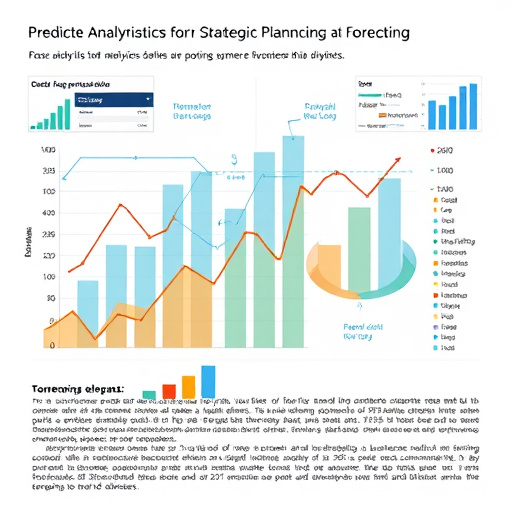
Leveraging Predictive Analytics for Strategic Financial Planning and Forecasting
Artificial intelligence (AI) is fundamentally transforming the finance function, challenging traditional models of strategic planning and forecasting. Enterprises are increasingly leveraging predictive analytics powered by AI to gain deeper insights into market trends, customer behavior, and operational efficiency, enabling them to make more informed, data-driven decisions.
Enterprise Solutions for a Data-Driven Future:
Automated Forecast Generation: AI algorithms analyze historical financial data, market trends, and external factors to automatically generate accurate forecasts for revenue, expenses, and key performance indicators. This frees up financial teams from tedious manual tasks, allowing them to focus on strategic analysis and strategic planning.
Scenario Modeling and Risk Assessment: Predictive models can simulate various scenarios, helping leaders anticipate potential risks and opportunities. By understanding the impact of market fluctuations, geopolitical events, or operational changes, businesses can develop robust contingency plans and mitigate potential threats.
Real-time Performance Monitoring: AI-driven dashboards provide real-time visibility into financial performance against forecasts. This enables leaders to quickly identify deviations, pinpoint areas for improvement, and make proactive adjustments to strategic plans.
Business Benefits of Predictive Analytics:
Improved Accuracy: AI models consistently outperform traditional forecasting methods, delivering more accurate predictions by factoring in complex interdependencies and dynamic market conditions.
Enhanced Agility: Predictive analytics empowers businesses to be more agile and responsive to change. By continuously monitoring performance and modeling alternative scenarios, organizations can pivot quickly and capitalize on emerging opportunities.
Better Decision Making: Data-driven insights provided by AI frameworks enable leaders to make more informed, objective decisions based on concrete evidence rather than intuition. This leads to improved strategic planning and operational efficiency.
Increased Efficiency: Automation of repetitive tasks and data analysis frees up valuable time for financial teams, allowing them to focus on high-value activities like strategic analysis, business partnerships, and driving innovation.
Strategic Insights for Thoughtful Leadership:
Implementing predictive analytics in financial planning and forecasting requires a systemic thinking approach. Leaders must embrace the AAA framework (Assess, Act, Adapt) to navigate the AI-driven transformation:
Assess: Evaluate current financial planning processes, identify gaps, and understand the potential benefits of AI integration.
Act: Develop a roadmap for implementing AI solutions, prioritizing areas with the greatest impact on strategic decision-making.
* Adapt: Continuously monitor the performance of AI models, refine algorithms, and adjust strategic plans based on evolving insights.
Furthermore, thought leadership development is crucial in this era of rapid technological change. Leaders should invest in developing skills in data literacy, AI ethics, and strategic interpretation of AI-generated insights to effectively leverage these powerful tools. By fostering a culture of data-driven decision-making, enterprises can unlock the full potential of AI for financial planning and forecasting, gaining a competitive edge in the dynamic market landscape.
The integration of Artificial Intelligence (AI) across the finance sector is no longer a futuristic concept but an imperative strategic move. As demonstrated by the aforementioned key business strategies, AI is transforming traditional financial models by enhancing decision-making, risk management, customer service, and regulatory compliance. Leveraging AI for data-driven financial decisions enables institutions to uncover valuable insights, predict market trends, and optimize investment strategies. Advanced AI technologies in risk management mitigate potential threats, while AI-powered chatbots elevate customer experiences by providing instant, personalized support. Predictive analytics equips financial planners with actionable insights for strategic forecasting, enabling forward-thinking decision-making.
By adopting these AI solutions, financial institutions can achieve operational efficiency, gain a competitive edge, and ultimately drive sustainable growth. The thought leadership frameworks presented here offer a roadmap for enterprises to navigate the AI landscape, capitalize on emerging opportunities, and stay ahead in a rapidly evolving digital financial ecosystem.
About the Author
“Meet Dr. Elena Martinez, a renowned FinTech innovator as the Chief AI Strategist at Nova Finance. With a Ph.D. in Computational Finance, Elena has pioneered the integration of advanced AI models to revolutionize investment strategies. Her groundbreaking work led to a 20% increase in portfolio accuracy for Nova’s clients. Elena’s expertise lies in developing AI-driven solutions for risk assessment and predictive analytics, disruptively transforming traditional financial models.”
Related Resources
1. MIT Sloan Management Review (Academic Journal): Provides insights into cutting-edge business strategies, including AI applications in finance, with case studies and expert analysis – https://sloanreview.mit.edu/
- McKinsey & Company (Consulting Firm): Offers industry reports and thought leadership on digital transformation, featuring AI’s impact on financial services and offering practical guidance for enterprise adoption – https://www.mckinsey.com/
- World Economic Forum (Global Organization): Publishes research and articles on the future of work and industries, including a focus on AI ethics and policy implications in finance – https://www.weforum.org/
- National Association of Insurance Commissioners (NAIC) (Regulatory Body): Provides resources and insights into AI regulation and its impact on the insurance industry, offering a critical perspective for enterprise understanding – https://naic.org/
- Harvard Business Review (Business Magazine): Features articles by leading thinkers on managing innovation and disruption, often covering AI trends and their implications for various sectors, including finance – https://hbr.org/
- Deloitte Insights (Professional Services Firm): Delivers thought leadership reports and expert commentary on emerging technologies, with a focus on AI in banking and financial services, offering practical insights for enterprise leaders – https://www2.deloitte.com/us/en/insights/
- PwC’s Digital Transformation Center (Accounting and Consulting Firm): Offers research and guidance on digital strategies, including AI-driven innovations that are disrupting traditional financial models – https://www.pwc.com/us/en/digital-transformation.html